
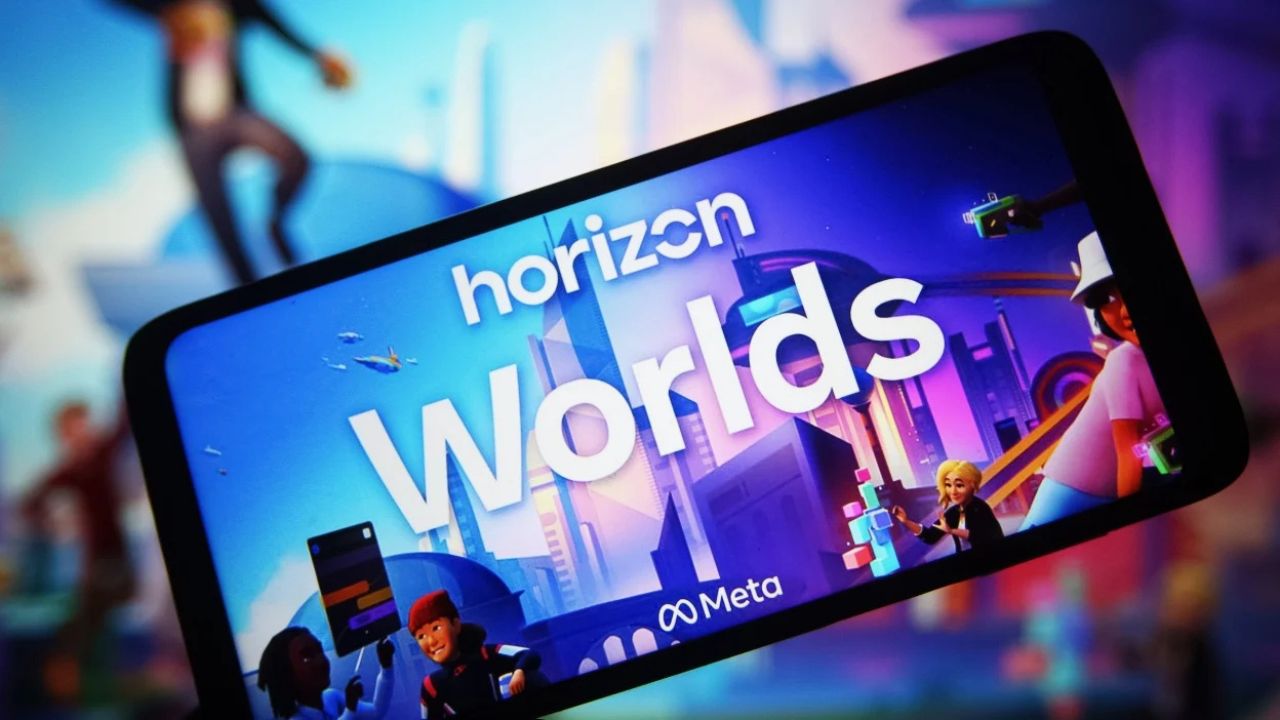
The idea of the metaverse was once seen as the future of the internet, but recent developments suggest that the vision is rapidly evolving. Meta, one of the biggest companies investing in virtual reality, has now decided to scale back its VR-based metaverse platform, Horizon Worlds.
The company confirmed that it will shut down the VR version of Horizon Worlds by June 15, 2026, marking a major shift in its long-term strategy.
This move signals that the metaverse is not disappearing, but it is clearly changing direction.
Meta’s Horizon Worlds Moving Away from VR
Horizon Worlds was originally launched in 2021 as a virtual reality social platform where users could create worlds, interact with others, and experience digital environments using VR headsets.
However, Meta has now decided to move the platform away from VR entirely. Starting March 31, 2026, Horizon Worlds will begin disappearing from VR stores, and by mid-June, it will no longer be accessible on VR headsets.
Instead, the platform will continue as a mobile-only experience, allowing users to access virtual worlds through smartphones rather than VR devices.
Why Meta Is Changing Its Metaverse Strategy
Meta’s shift is largely driven by how users are actually engaging with the platform. Despite heavy investment, VR adoption has grown more slowly than expected.
The company has acknowledged that:
- Most users prefer mobile or simpler platforms
- VR hardware still has limited mass adoption.
- The cost of building and maintaining metaverse platforms is extremely high.
In fact, Meta has spent tens of billions of dollars on its metaverse division over the past few years, making it one of the most expensive bets in tech history.
Because of this, the company is now focusing on mobile experiences and AI technologies instead of purely VR-based worlds.
What This Means for the Metaverse
This decision does not mean the metaverse is dead. Instead, it shows that the concept is evolving.
Originally, the metaverse was imagined as a fully immersive VR world where people could work, play, and socialize. Now, companies are realizing that users prefer easier access through mobile devices and existing platforms.
The shift also highlights a bigger trend in the tech industry:
- Moving from VR-heavy experiences to hybrid or mobile-first platforms
- Integrating AI into digital environments
- Focusing on scalability and real-world usability
Industry Reaction and Future Outlook
The change has sparked mixed reactions. Some see it as a step back for VR, while others believe it is a necessary adjustment.
Developers are now being encouraged to build experiences that work across multiple platforms, not just VR. Meta itself has stated that separating its VR platform from Horizon Worlds will allow both to grow more effectively.
At the same time, the company is still investing in VR hardware, meaning the technology is not being abandoned entirely.
Final Thoughts
The metaverse is no longer just about virtual reality headsets. Meta’s decision to move Horizon Worlds away from VR shows that the future of digital worlds will likely be more flexible and accessible.
Instead of a single fully immersive universe, the metaverse may evolve into a mix of mobile, AI-driven, and cross-platform experiences that are easier for users to access.
The post Metaverse Shift: Meta Scales Back VR Plans as Horizon Worlds Moves Away from Headsets appeared first on trendblog.net.